
2026-08-31 · Christopher Davis
How To Spot Hidden Water Damage After Monsoon Rains In Phoenix
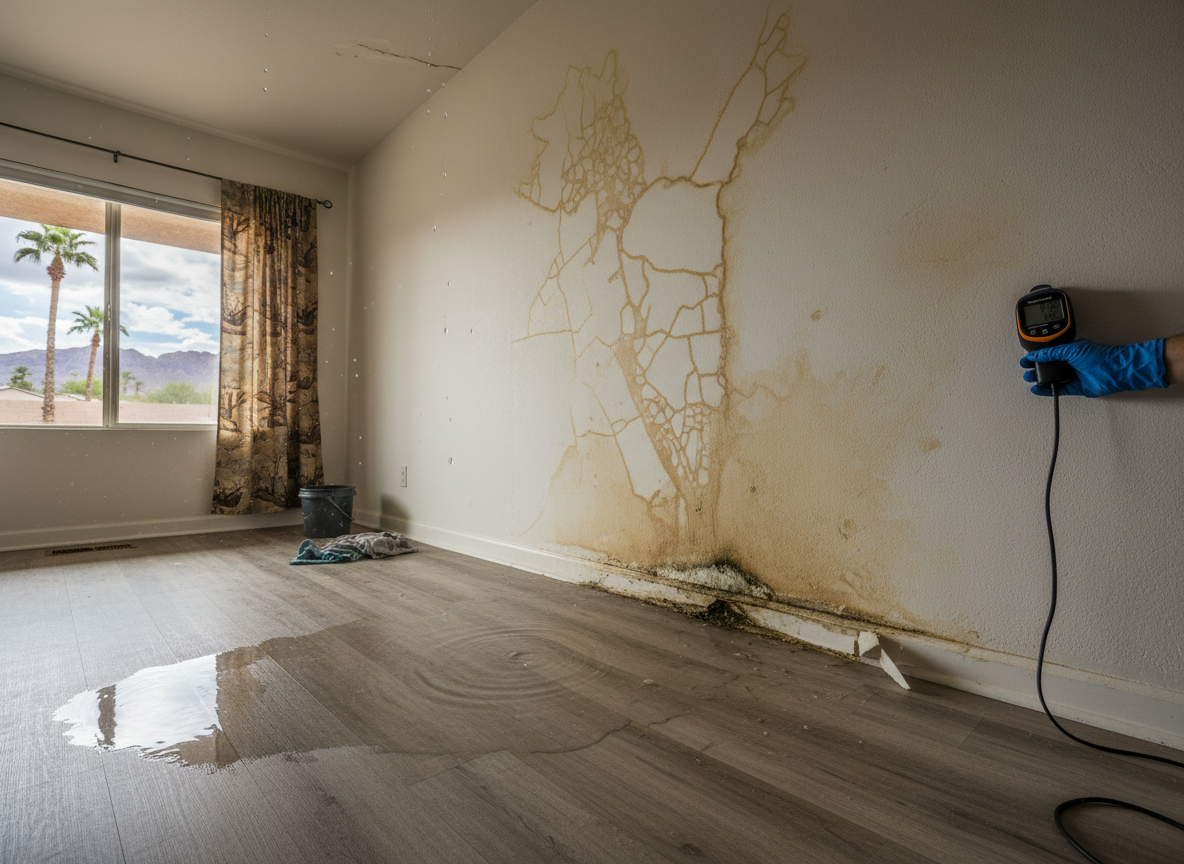
After monsoon rains hit Phoenix, hidden water damage often appears first as subtle discoloration or warping in homes built on slab foundations common in Arcadia, Biltmore, and Maryvale. Check for these indicators within 48–72 hours while temperatures still exceed 100°F, because rapid surface drying in the hot desert climate masks deeper saturation in drywall, subfloors, and concrete that can lead to mold within 5–7 days.
Inspecting Walls and Ceilings
Monsoon downpours frequently drive water behind stucco exteriors and into attic spaces of 1970s–1990s homes in Camelback East and South Mountain. Look for yellow-brown stains along ceiling joints or baseboards that reappear after the surface dries. Press gently on drywall; soft spots indicate saturation even when paint looks intact. In Maricopa County neighborhoods with flat roofs, water often pools at parapet walls and seeps downward, creating musty smells near HVAC returns. Measure moisture with a meter if available—readings above 15% on interior walls signal trapped water that surface fans alone will not remove. Storm water damage restoration addresses these patterns when monsoon flows exceed normal drainage capacity around Papago Park and the Phoenix Zoo area.
Checking Flooring and Slab Foundations
Tile and hardwood floors in Ahwatukee and Maryvale homes often conceal moisture beneath because the extreme summer heat evaporates standing water before residents notice. Lift area rugs and inspect for cupping along plank edges or grout that feels cool to the touch compared with surrounding areas. Slab leaks worsen after monsoons when soil expansion around foundations in Scottsdale and Tempe pushes water under the concrete. Dark lines along baseboards or buckling at door thresholds usually mean subfloor saturation that requires extraction equipment, not just dehumidifiers. Flood damage cleanup crews routinely map these moisture pockets with infrared cameras to avoid missing water that later fuels mold growth.
Detecting Odors and Early Mold
Musty smells near bathrooms or laundry rooms in older Biltmore and Arcadia properties signal hidden moisture trapped in wall cavities after monsoon runoff. The hot desert climate accelerates microbial growth once humidity spikes above 60% indoors, even if outdoor air feels dry. Check under sinks and around water heaters for soft cabinet bottoms or rust on metal straps. If an odor persists after opening windows, moisture likely sits behind drywall near plumbing penetrations. Preventing mold growth after flooding in Arizona homes explains how to ventilate properly without spreading spores. Seasonal flood risks in Phoenix neighborhoods near the Salt River details why low-lying blocks in Laveen and South Mountain see repeated intrusion that leaves residual dampness for weeks.
Verifying Hidden Damage in Utility Areas
Water heater closets and laundry rooms in Mesa and Tempe homes often hide leaks that monsoon rain masks until sewage odors emerge. Lift access panels and shine a light along supply lines for mineral deposits or darkened wood. In slab-on-grade construction typical across Maricopa County, water migrates under the concrete and reappears as efflorescence on garage floors. Document any soft spots with photos before they worsen. When odors suggest possible sewage backup cleanup needs, professional assessment prevents cross-contamination that standard drying cannot resolve.