2026-08-31 · Christopher Davis
Cost Guide For Flood Damage Cleanup In The Phoenix Area
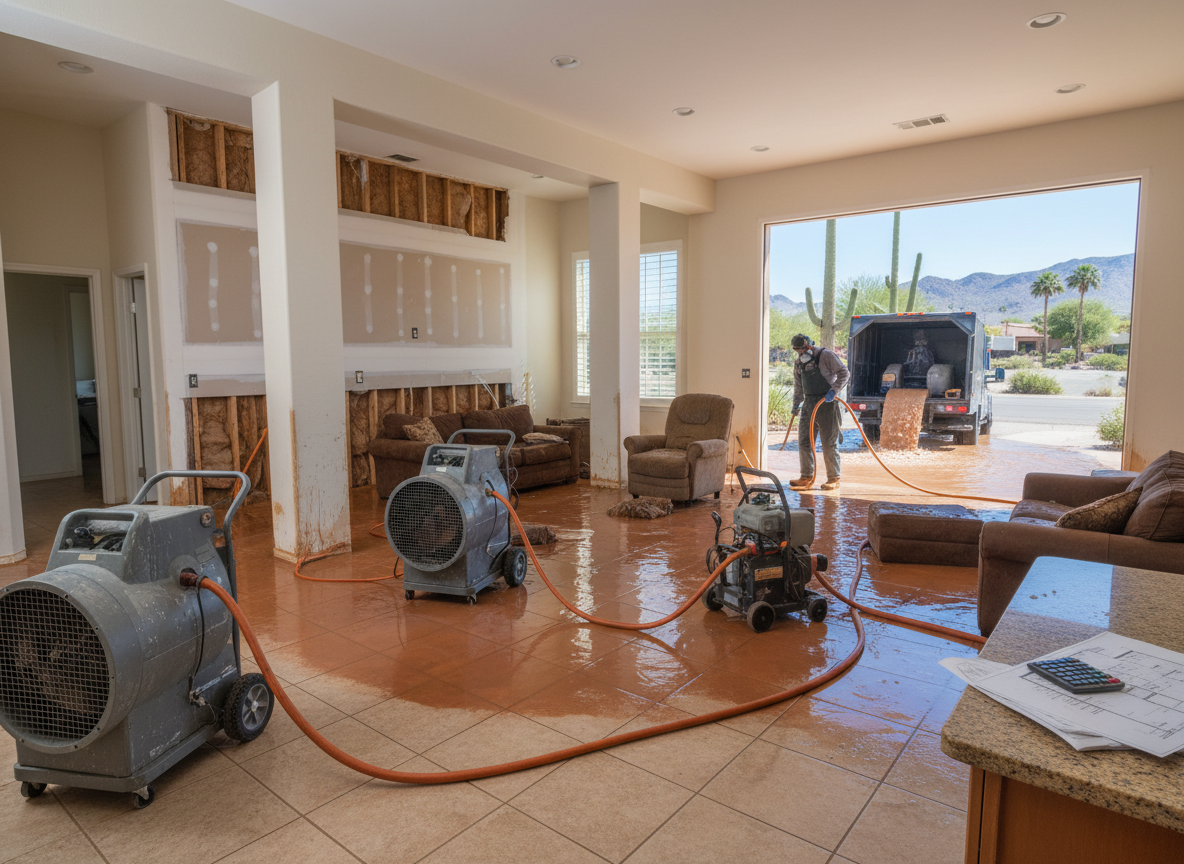
Flood damage cleanup in the Phoenix area typically runs between $3,500 and $12,000. The exact total depends on square footage affected, water category, and how quickly extraction begins.
Average Cost Ranges for Phoenix Homes
Smaller single-story homes in neighborhoods like Maryvale or South Mountain often fall at the lower end when water stays confined to one room. Larger properties in Arcadia or Biltmore with water reaching multiple rooms or subflooring push toward the higher end. Extraction and drying for 1,000 square feet of Category 1 water usually lands between $3,500 and $5,500. Category 3 water that requires full containment and disposal equipment adds $4,000 to $7,000 more. These figures cover labor, equipment, and disposal but exclude reconstruction.
How Phoenix Heat and Monsoons Change the Job
Extreme summer temperatures above 110 degrees can speed surface drying yet drive moisture deeper into stucco and slab foundations common across Maricopa County. Flash floods during monsoon season frequently affect yards in Ahwatukee and Camelback East, sending water under doors and into HVAC returns. Crews must run dehumidifiers longer on slab leaks because concrete holds moisture for weeks. Homes near Papago Park or the Phoenix Zoo sit on older fill dirt that drains poorly, extending drying times by several days compared with newer subdivisions in nearby Tempe or Mesa.
Cost Factors in Specific Neighborhoods
Homes built in the 1960s and 1970s in Biltmore and Arcadia often have plaster walls and original plumbing that complicate water removal. Slab leaks under tile floors require moisture meters and targeted drying rather than simple carpet extraction. Properties in Maryvale with flat roofs see repeated intrusion after heavy rain, raising repeat-visit costs. South Mountain homes on sloped lots direct runoff toward foundations, so technicians frequently add perimeter drainage checks. These local building patterns directly affect labor hours and equipment needs.
When Sewage Backup Cleanup Increases the Total
Category 3 water from sewage backups demands full PPE, containment barriers, and biohazard disposal that adds $2,000 to $5,000 over standard flood work. Sewage backup cleanup protocols require removing and replacing porous materials within 24 hours. Technicians also test for hidden contamination behind baseboards common in older Phoenix construction.
Next Steps After Initial Assessment
Homeowners should document every affected room with photos before any removal begins. Steps to take immediately after a flash flood hits your Phoenix home outlines safe shutoff locations for main water valves in typical Maricopa County layouts. Prompt extraction within the first four hours limits mold growth that would otherwise add mold damage remediation costs later.
Planning for Structural Drying and Follow-Up
Structural drying and dehumidification often accounts for 30 to 40 percent of the total bill in Phoenix heat. Technicians place air movers and dehumidifiers for three to five days on average, checking moisture readings daily. How to dry out a flooded basement in Phoenix heat explains why slab homes need longer cycles than homes with crawl spaces. Final clearance testing prevents hidden moisture from surfacing during the next monsoon.