
2026-08-31 · Christopher Davis
Seasonal Flood Risks In Phoenix Neighborhoods Near The Salt River
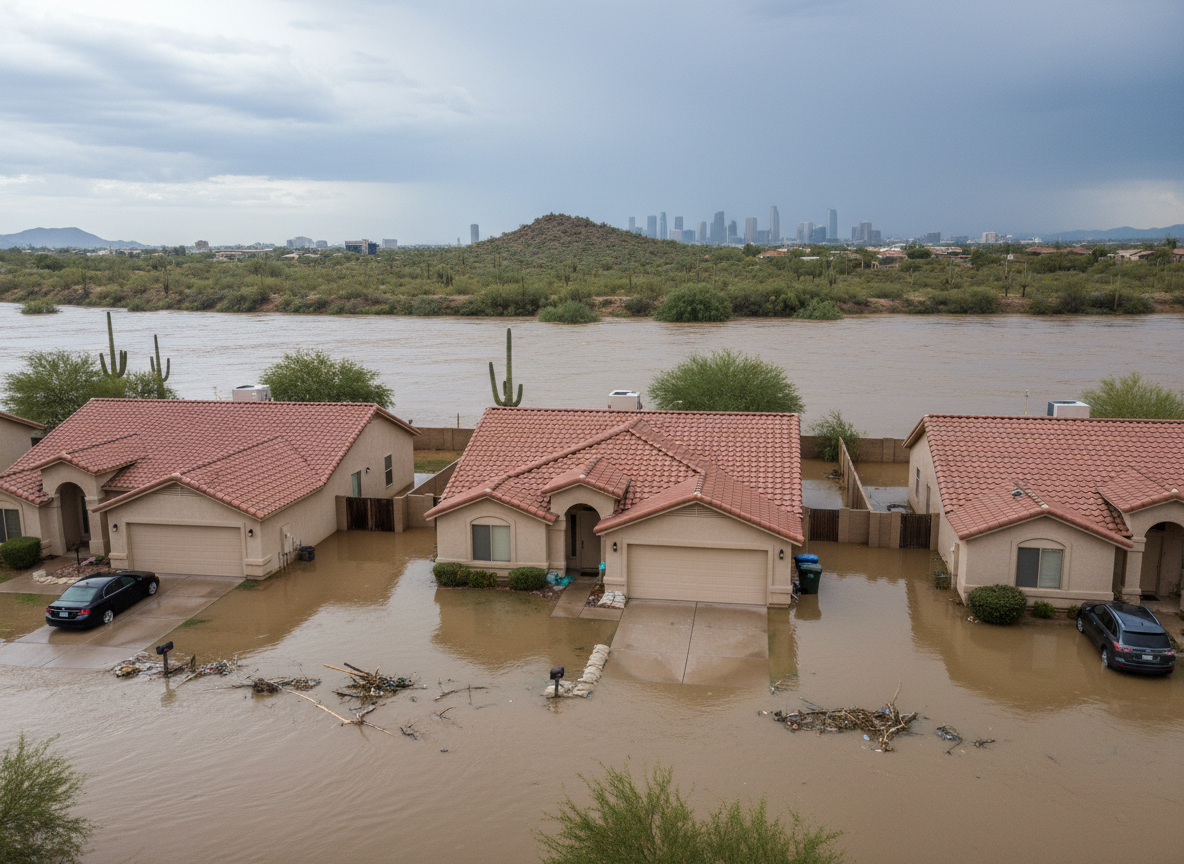
Monsoon storms from July through September create the primary seasonal flood risk along the Salt River in Phoenix, with heavy rainfall often exceeding 1 inch per hour and sending water into low-lying neighborhoods like Ahwatukee and South Mountain. These events turn normally dry channels into fast-moving flows that reach homes built on former floodplains in Maricopa County. Properties in these zones face both surface flooding and increased pressure on aging sewer lines that can lead to backups.
Monsoon Patterns and Salt River Overflow
The hot desert climate with extreme summer heat sets up intense afternoon thunderstorms that dump water faster than the Salt River and its tributaries can handle. In years with strong monsoon activity, water levels can rise several feet within hours near the river corridor that borders parts of Ahwatukee and South Mountain. Older homes in Maryvale and adjacent areas often sit on lots with minimal grading, so water pools against foundations instead of draining toward streets. Nearby cities such as Tempe and Mesa experience similar overflow that can back up into Phoenix streets when the river runs high.
Neighborhood-Specific Vulnerabilities
Ahwatukee and South Mountain see the most direct impact because their terrain slopes toward the Salt River channel. Arcadia and Biltmore sit higher but still receive runoff from surrounding hills that feeds into the same system during prolonged storms. Homes built before 1990 in these neighborhoods frequently lack modern French drains, so water enters crawl spaces and garages first. Maryvale properties near older storm drains face added sewage backup risks when the system becomes overwhelmed and pushes wastewater into yards.
Residents in these areas should watch for early signs such as water pooling near street drains or gurgling sounds from floor drains during heavy rain. Checking elevation relative to the Salt River helps determine whether a property sits in a higher-risk zone.
How Flooding Affects Local Homes and Infrastructure
Extreme summer heat followed by sudden downpours stresses both roofs and underground pipes across Maricopa County. Concrete slab foundations common in Phoenix expand and contract with temperature swings, creating small cracks that allow water to seep in during river overflows. In neighborhoods like South Mountain, this often leads to moisture trapped under flooring that requires professional extraction to prevent further issues. Sewage lines installed decades ago in Maryvale can back up when river water infiltrates the municipal system.
Flash flooding also carries sediment and debris from the desert terrain that clogs sump pumps and French drains already taxed by the volume of water. Homeowners near Papago Park or the Phoenix Zoo have reported similar problems when upstream runoff reaches their streets.
Practical Steps for Phoenix Homeowners
Monitor National Weather Service alerts for Salt River flow rates during monsoon months and move valuables above ground level in advance. Clear debris from gutters and downspouts before storm season to reduce the chance of water entering through roof penetrations. For properties in Ahwatukee or South Mountain, consider grading adjustments that direct water away from the foundation toward the street.
When flooding occurs, contact professionals for flood damage cleanup to handle extraction and drying before moisture affects drywall or subfloors. Separate sewage backup cleanup is often needed if river water mixes with wastewater lines.