
2026-08-31 · Christopher Davis
Preventing Mold Growth After Flooding In Arizona Homes
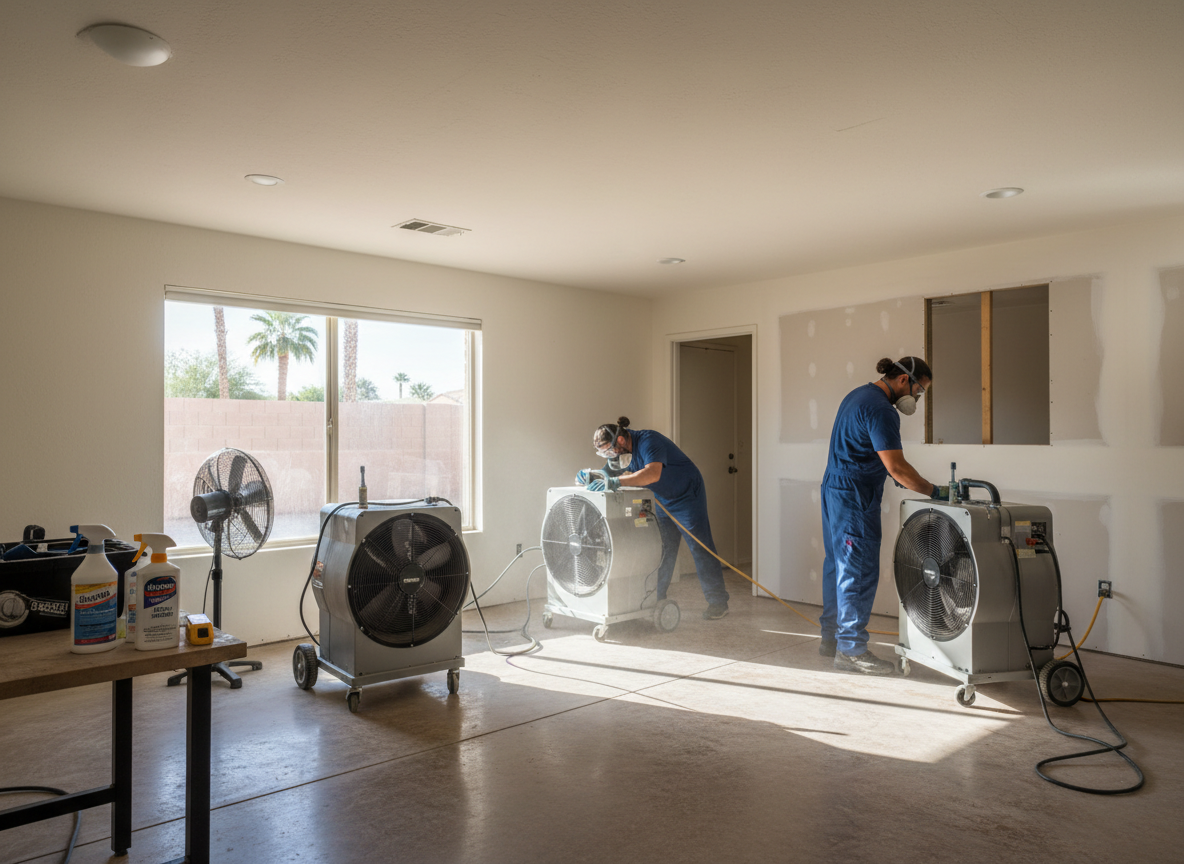
Mold growth after flooding in Arizona homes can begin within 24-48 hours when moisture remains trapped in materials. Phoenix Restoration Pros focuses on flood damage cleanup to interrupt that timeline through extraction and drying before spores take hold in Maricopa County properties.
Immediate Water Extraction Steps
Begin by removing standing water within the first few hours using professional pumps and vacuums rated for the volume present. In Phoenix, monsoon-driven flash floods often deposit several inches across slabs in homes built in the 1970s and 1980s in Maryvale and Camelback East. Homeowners should avoid DIY shop vacuums that cannot handle sewage-tainted water from backups common near Papago Park. Move furniture and belongings out of affected zones immediately, then document conditions with photos for insurance. Extraction must reach under baseboards and into carpet padding, because residual moisture in these layers feeds mold colonies even when surface temperatures exceed 100 degrees in summer. Linking to targeted flood damage cleanup ensures crews arrive with truck-mounted systems sized for the job.
Drying and Dehumidification Requirements
After extraction, run commercial air movers and dehumidifiers for 3-5 days minimum, targeting indoor humidity below 50 percent. Phoenix summers push ambient temperatures above 110 degrees, which speeds surface drying but leaves hidden moisture in wall cavities and under tile common in Biltmore and Arcadia homes. Technicians place moisture meters in multiple locations daily to confirm readings drop below 15 percent on wood and below 1 percent on concrete. Without this step, drywall behind cabinets or insulation in attics can support mold within a week. Structural drying and dehumidification teams adjust equipment placement based on the home's construction age and orientation toward south-facing exposures that retain heat longer.
Hidden Moisture Risks in Local Housing Stock
Desert homes in Tempe and Mesa often feature stucco exteriors and slab foundations that trap water along expansion joints during heavy rains. Older properties in South Mountain and Ahwatukee may have original plumbing that fails during backups, introducing organic material that accelerates mold on subfloors. Check behind appliances and in HVAC returns, because the extreme heat can mask dampness until odors appear. Residents should also inspect attics after roof leaks near Chase Field or Desert Botanical Garden areas, where wind-driven rain pushes water under tiles. Consistent meter checks and removal of saturated insulation prevent colonies from spreading through shared wall spaces typical in these neighborhoods.
When Professional Remediation Becomes Necessary
If moisture persists beyond 48 hours or sewage is involved, contact specialists for mold damage remediation after water damage. Phoenix Restoration Pros operates Monday through Friday 8am-6pm and Saturday 9am-2pm from their location at 4750 S 44th Pl Ste 120, Phoenix, AZ 85040, serving nearby Scottsdale and the broader Maricopa region. For next steps after a flood event, review steps to take immediately after a flash flood hits your Phoenix home and local considerations for water damage in desert homes to understand how climate and soil conditions change the timeline on every job.