
2026-08-31 · Christopher Davis
How To Dry Out A Flooded Basement In Phoenix Heat
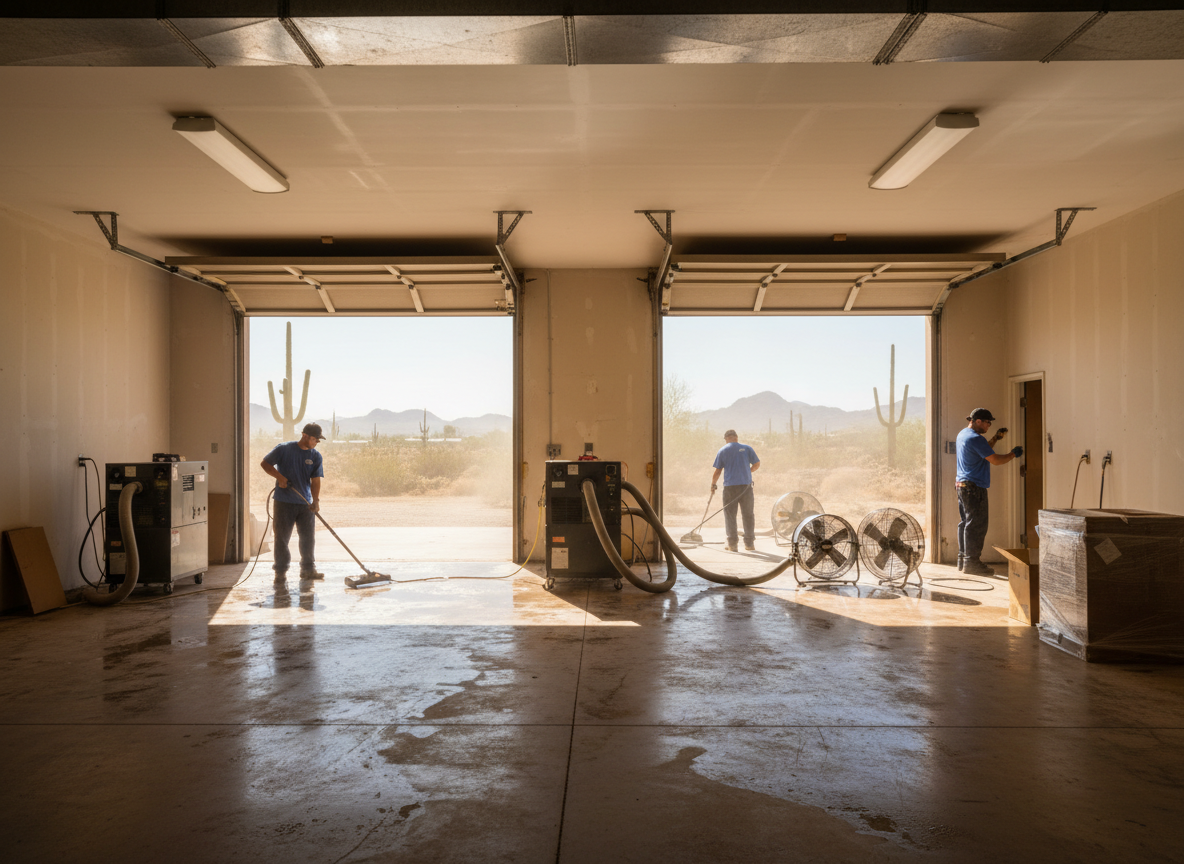
In Phoenix heat, a flooded basement can reach safe dryness levels in 5–10 days when extraction, airflow, and dehumidification run continuously, though older homes in Arcadia or Biltmore often need extra days because of thicker masonry walls and slab-adjacent soil that holds moisture longer.
Initial Water Removal Steps
Start by shutting off power to the basement at the main panel, then remove standing water with submersible pumps rated for at least 2,000 gallons per hour. In Maricopa County, monsoon runoff frequently carries silt from Camelback Mountain slopes into lower-level spaces, so vacuum out debris before it settles into floor drains. Homeowners in South Mountain and Maryvale report that waiting more than 24 hours allows water to wick into drywall, extending the overall drying window by several days. Once bulk water is gone, document every affected area with photos for insurance purposes before moving to airflow equipment.
Managing Heat and Humidity
Phoenix's hot desert climate with daytime temperatures above 105°F accelerates evaporation yet creates high indoor humidity that slows drying at the slab level. Run commercial dehumidifiers set to 45–50% relative humidity alongside air movers positioned to create a circular pattern across the floor. Homes near Papago Park or the Phoenix Zoo often sit on clay-heavy soil that releases trapped moisture slowly, so place moisture meters at multiple depths every 12 hours. Avoid opening windows during peak afternoon heat; instead, vent exhaust from dehumidifiers outside to prevent reintroducing warm, moist air.
Monitoring and Equipment Placement
Check moisture readings daily with a pin-type meter on wood framing and a non-invasive scanner on concrete. In Ahwatukee and Camelback East, where many 1970s homes have partial basements, focus extra airflow under stairs and around HVAC returns that can trap humidity. If readings stay above 15% after four days, increase the number of air movers rather than raising dehumidifier temperature settings. Link to detailed extraction methods on the Flood Damage Cleanup page for equipment rental options common in the region.
Addressing Secondary Issues
Once surface moisture drops below 12%, inspect for hidden pockets behind baseboards or under cabinets that can feed mold within 48–72 hours in desert heat. Tempe and Mesa residents frequently see swelling in engineered flooring when slab moisture migrates upward, requiring targeted drying mats. Continue running equipment until all readings stabilize for 48 consecutive hours. For deeper structural concerns after flash floods, review the Steps To Take Immediately After A Flash Flood Hits Your Phoenix Home article before attempting repairs yourself.
Final Drying Verification
Test the space with a thermo-hygrometer for three days after equipment removal to confirm equilibrium with outdoor conditions typical of Scottsdale or central Phoenix. Older masonry in Biltmore neighborhoods can retain subsurface moisture for weeks, so schedule follow-up meter checks at the 14-day mark. Proper drying prevents long-term issues with finishes and reduces the chance of odors returning during the next monsoon season.