
2026-08-31 · Christopher Davis
Maintaining Gutters And Drainage To Prevent Flooding In Phoenix Yards
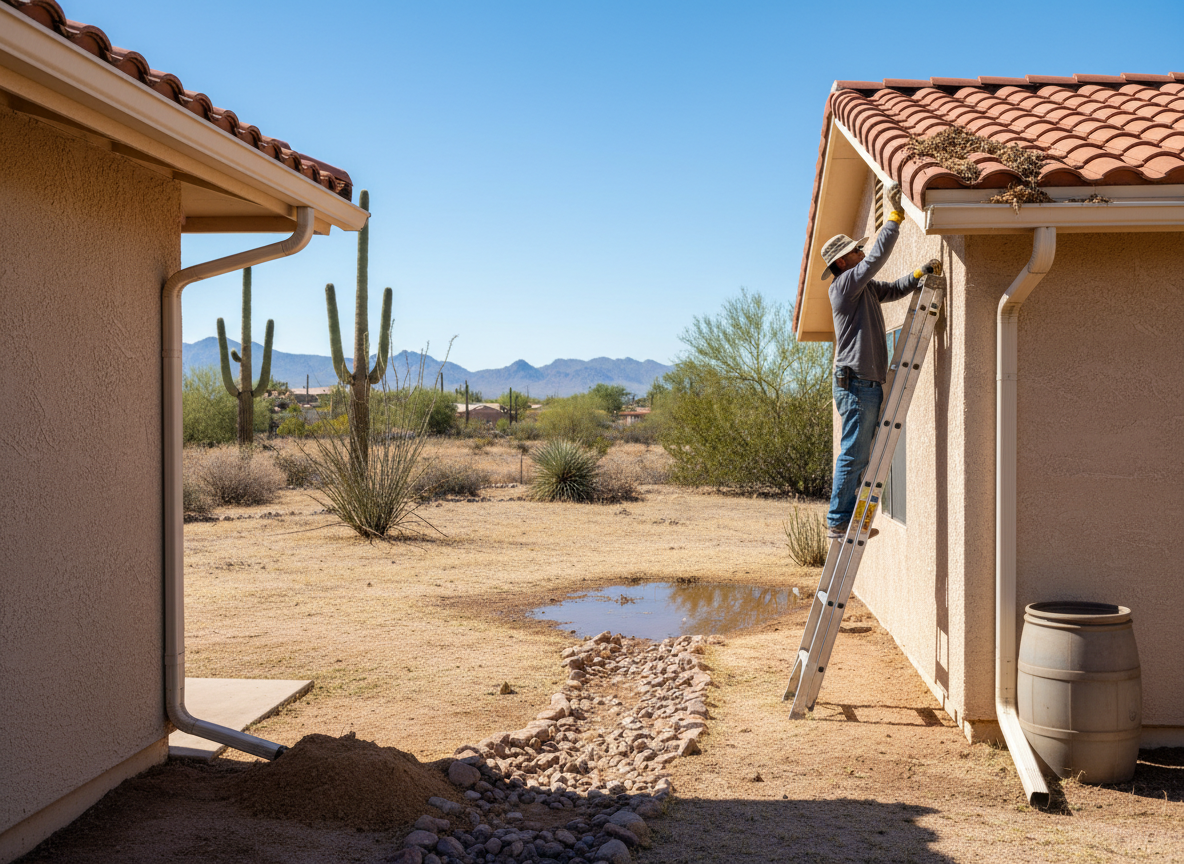
Regular cleaning of gutters every 3 to 4 months combined with grading yard soil away from foundations cuts flood risk in Phoenix yards by keeping water moving during July through September monsoon storms. In Maricopa County, intense but brief downpours on compacted desert ground create rapid runoff that overwhelms neglected systems, especially on older lots in Arcadia and Biltmore where mature landscaping can trap debris.
Matching Maintenance to Phoenix Monsoon Patterns
Phoenix receives most of its annual rainfall in short, high-volume events that drop 1 to 2 inches in under an hour. These storms hit hardest in south-facing yards near Camelback Mountain and Papago Park where slopes direct water toward homes. Homeowners in Ahwatukee and Maryvale often see water pool against stucco foundations because original builders used minimal slope. Checking downspouts after each storm and ensuring they discharge at least 5 feet from the house prevents soil saturation that leads to slab movement. Extending downspouts with 4-inch corrugated pipe buried 6 inches deep moves water toward street drains before it reaches the structure.
Inspecting Gutters and Drainage Components
Walk the roofline twice a year, once before monsoon season and once after leaf drop from desert trees. Look for sagging sections, separated seams, and debris dams at elbows. In South Mountain neighborhoods, wind-blown palm fronds commonly block scuppers on flat-roof homes built in the 1970s. Clear debris by hand or with a wet-vac, then flush each run with a garden hose to confirm flow reaches the ground outlet. Check splash blocks for cracks and replace any that tilt water back toward the foundation. Homeowners in Camelback East should also verify that French drains installed during original construction still slope at least 1 inch per 10 feet.
Improving Yard Grading and Soil Conditions
Many lots in older sections of Arcadia sit on caliche layers that shed water instead of absorbing it. Adding 4 to 6 inches of amended soil along the foundation and creating a 6-foot-wide swale that slopes 1 inch per foot toward the street improves drainage without major excavation. In Tempe and Mesa border areas, installing permeable pavers in driveways allows some infiltration while directing excess flow to the curb. Avoid planting heavy-root shrubs within 3 feet of the house, as roots can lift soil and create low spots that collect water during the next storm.
Connecting Maintenance to Flood Response
Even well-maintained systems can be overwhelmed by a rare 3-inch event. When water enters the home, immediate flood damage cleanup limits secondary issues such as drywall saturation. Residents who follow the recommended steps to take immediately after a flash flood hits your Phoenix home reduce mold growth during the 100-plus-degree drying period that follows. Properties in Maryvale and South Mountain that border washes benefit from annual professional inspections of underground drains that standard homeowner tools cannot reach.
Knowing When Professional Help Is Required
If standing water remains 24 hours after rain or if interior moisture appears near baseboards, contact a restoration team familiar with Maricopa County building practices. Persistent issues often trace to collapsed clay sewer lines common in 1960s homes or to scupper overflows on flat roofs. Technicians can camera drains and recommend targeted repairs before sewage backup occurs. Keeping gutters clear and soil graded remains the most direct way to avoid these calls.