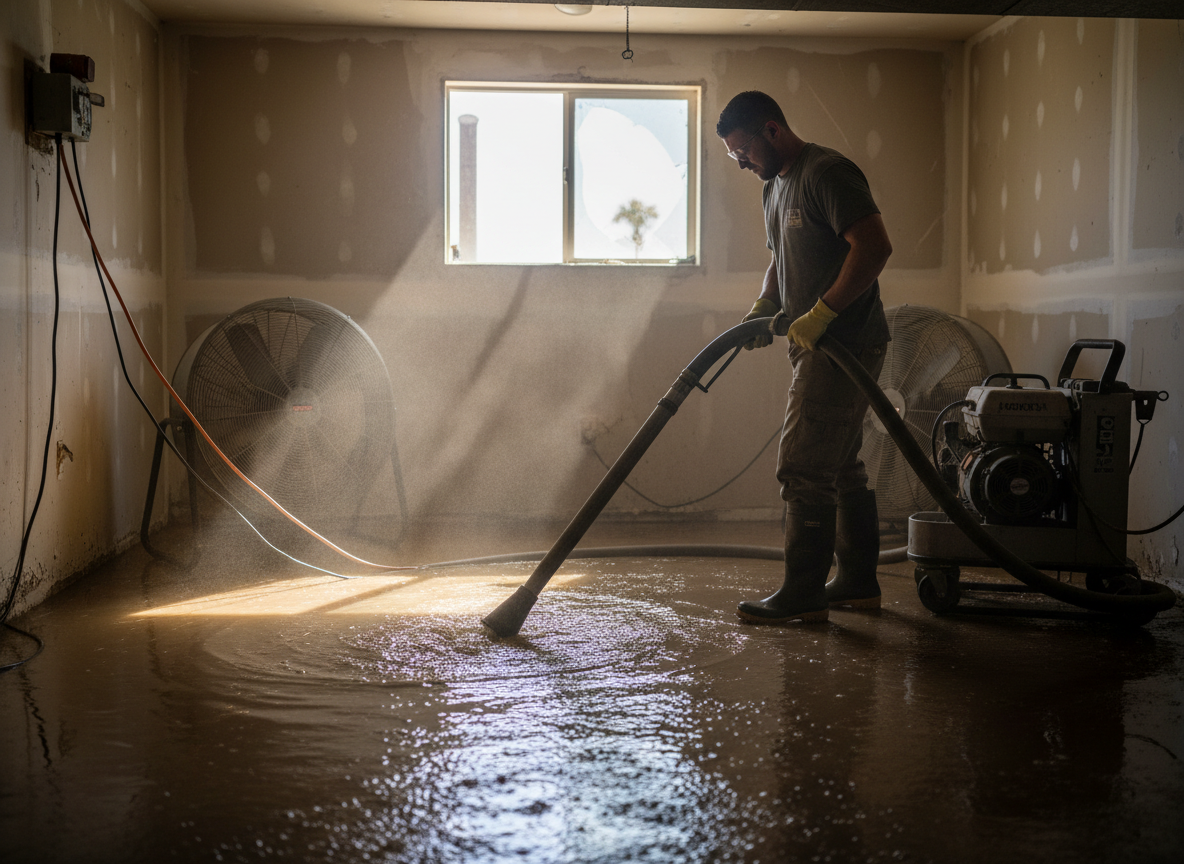
Phoenix homes in neighborhoods like Arcadia and Biltmore often feature older stucco construction with slab foundations that trap water after heavy monsoon runoff or pipe failures. Extraction crews must account for the extreme summer heat that accelerates surface drying while leaving moisture deep in drywall and underlayment. Maricopa County building practices from the 1970s and 1980s mean many properties lack modern vapor barriers, so technicians pull baseboards early and use moisture meters to map hidden saturation before mold sets in.
Near Camelback Mountain and in Camelback East, rocky soil and steep lots direct water toward foundations during rare but intense storms. Extraction equipment must handle both clean floodwater and sewage backups that frequently occur when Tempe or Scottsdale systems back up into lower-lying Phoenix streets. Crews avoid cutting into load-bearing walls without checking original construction drawings because many 1960s-era homes in Maryvale have post-tension cables that complicate access.
South Mountain properties sit on expansive clay soils that shift when saturated, cracking slabs and allowing water to travel under finished floors. After extraction, dehumidifiers run longer in these homes because the desert air holds little ambient moisture yet trapped water evaporates slowly through thick tile and grout. Technicians always document pre-existing cracks so homeowners understand what the flood event worsened versus what was already present.
Technician insight
In Phoenix the thing that catches most people out with Water Extraction & Removal is how fast the extreme summer heat dries the surface while water stays trapped under tile or in slab cracks, especially in 1970s Maryvale homes where the clay soil expands and creates new paths for moisture to travel.
Ahwatukee Slab Leak Extraction
A pipe under the kitchen slab failed during a heat wave and sent water across the tile into the adjacent family room. Extraction revealed moisture had traveled under the base cabinets and into the drywall behind the sink. Crews removed the pad, extracted from the slab edges, and ran drying equipment for four days until readings returned to normal.
Water Extraction & Removal Services We Offer
✓Emergency Flood Water Extraction
Pump-out and removal of standing floodwater from basements and ground floors in Arcadia and Ahwatukee homes before it migrates into adjacent rooms.
✓Sewage Backup Extraction
Safe removal and disposal of contaminated water from sewage backups that affect properties near older Maricopa County sewer lines in Maryvale and South Mountain.
✓Carpet and Pad Water Removal
Extraction of water from saturated carpet and padding in Biltmore and Camelback East residences using truck-mounted equipment to prevent mold under flooring.
✓Slab Leak Water Extraction
Targeted removal of water that has pooled beneath tile or hardwood after slab leaks common in Phoenix homes built on expansive desert soils.
✓Attic and Roof Leak Extraction
Removal of rainwater that enters through roof penetrations near Papago Park and drains into ceiling cavities of older stucco homes.
Water Extraction & Removal Cost in Phoenix, AZ
| Service | Typical Range | What Affects It |
|---|---|---|
| Small room flood extraction | $350–$650 | Varies with water depth and carpet removal needs |
| Whole-home extraction after backup | $900–$1,800 | Higher when sewage requires biohazard handling |
| Slab leak water removal | $500–$950 | Depends on access and how far water traveled under flooring |
| Attic water extraction | $400–$750 | Includes ceiling cavity drying in older stucco homes |
Ranges are typical for Phoenix, AZ and confirmed with an exact written quote before any work starts.
How it works
- 1
Site Assessment
Technicians inspect the affected rooms, measure moisture levels in walls and floors, and identify the water source while noting construction details typical of the neighborhood.
- 2
Water Removal
Truck-mounted pumps and portable extractors remove standing water and pull moisture from carpet, pad, and subfloors without spreading contamination.
- 3
Drying Setup
Air movers and dehumidifiers are placed based on the home's layout and the extreme heat that affects evaporation rates in Phoenix summers.
- 4
Final Moisture Check
Readings confirm materials have returned to acceptable levels before equipment is removed and the homeowner receives a written report.
Pricing
Upfront quotes after inspection; price depends on water volume, affected square footage, and whether sewage contamination is present.